
Chasing Boston, Finding Perspective
One Mile at a Time

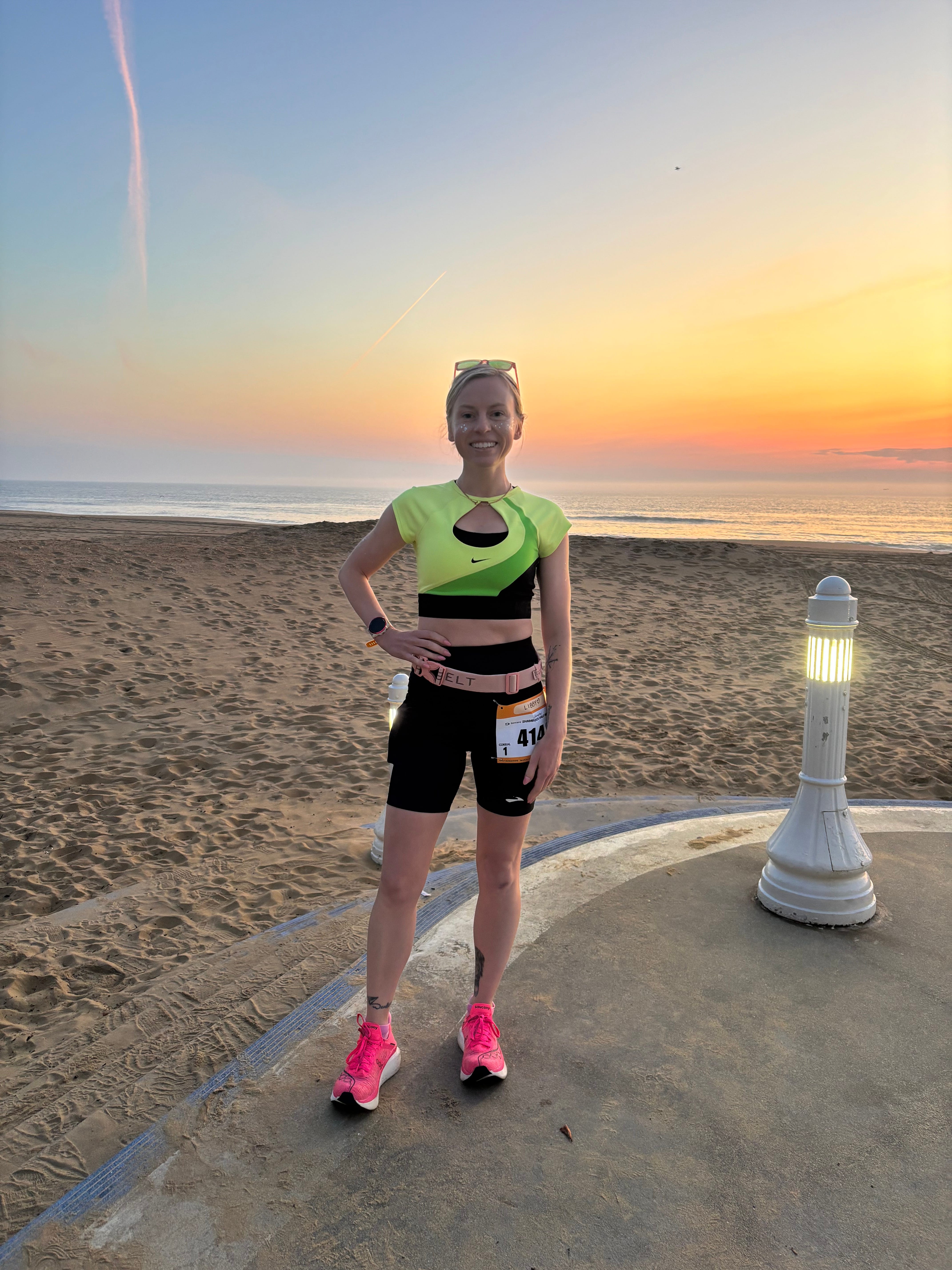
In a few weeks, I will stand at the starting line of the Boston Marathon—one of the most recognizable and historically significant road races in the world.
The realization settled in during a recent morning run. What began as a routine workout turned into a moment of reflection on how long and nonlinear the path to this start line has been.
Marathon running has become more visible in recent years. Major races like Boston, Chicago, and New York now feel, at times, less like distant goals and more like common milestones. Social media has amplified that perception. Finishing times, training cycles, and race entries are constantly on display, often without context.
The result is a subtle but persistent pressure to measure progress against others.
In that environment, it becomes easy to lose perspective. What qualifies as “fast” varies widely. For some runners, qualifying for Boston happens quickly. For others, it takes years of incremental improvement. Most fall somewhere in between.
I count myself among them.
A phrase often repeated in distance running is simple: run the mile you’re in. At its core, it is a directive to focus only on the immediate task—to resist the instinct to compare, project, or rush.
The broader cliché—“it’s a marathon, not a sprint”—is frequently applied to life. The comparison is imperfect but useful. A marathon demands sustained effort over time, and success depends on the ability to manage both physical strain and mental distraction. Even Eliud Kipchoge has framed it as a metaphor, referring to the “marathon of life.”
The distance itself—26.2 miles—does not change. Experience may improve performance, but it does not make the effort trivial. The only practical way to approach it is incrementally.
One mile at a time.
That same principle applies beyond running. Career timelines, personal milestones, and external expectations often create the illusion that progress should follow a fixed schedule. When it doesn’t, comparison fills the gap.
The question—why am I not there yet?—becomes difficult to avoid.
My own path to Boston reflects that tension.
I grew up in Massachusetts, where the race carries particular cultural weight. I was in Boston during the 2013 marathon bombing, an event that reshaped the city and the running community. At the time, I had only recently begun running longer distances while recovering from a serious eating disorder.
The idea of completing a marathon—let alone qualifying for Boston—felt remote.
In 2020, I joined a charity team and trained for the race while living in California. The COVID-19 pandemic led to its cancellation, and I completed the event virtually instead. It was a partial experience, lacking the defining elements of the race itself.
The outcome was not what I had initially envisioned, but it reinforced a longer view: progress is not always linear, and timing is rarely predictable.
In 2023, I returned to Boston through the same charity, raising funds for stroke and heart disease research—causes with personal significance. That race, run in person, marked a turning point. It closed one chapter while opening another: the goal of qualifying.
By that point, running had become more than a goal-oriented activity. It had developed into a consistent practice, one that provided structure, community, and measurable progress over time. Training improved. Results followed, though gradually.
Since 2020, I have completed eight marathons. None were exceptional in isolation, but collectively they established a foundation.
In March 2025, that foundation produced a result that had once seemed unlikely: a qualifying time for Boston, achieved with a margin that suggested it was not an outlier.
For some runners, Boston becomes a recurring objective. For others, it remains a singular milestone. Whether to return is a separate question.
What remains constant is the principle that made the outcome possible.
Will I chase that again? Maybe.
But I want to stay grounded in the principle that got me here.
Because what this journey has taught me is that self-doubt is often the biggest obstacle. It’s the quiet voice that tells you something is out of reach before you’ve even tried. It lingers, convincing you to hold back.
And the only way through it is to narrow your focus—to bring yourself back to what’s right in front of you.
Not the entire marathon. Just the next mile.
Boston isn’t everything to me. But it represents something meaningful—something worth pursuing. And along the way, it gave me something even more valuable: belief in myself.
Every runner on that starting line has their own story. I’m just one of thousands.
But right now, the mile I’m in is a good one.
It’s not one I want to rush through. It’s one I want to feel fully—to take in, to appreciate.
Because this is more than a race.
More than a mile.
More than a moment.
It’s a chapter of my life.
I haven't read Ryan Hall's book Run the Mile you are in but will surely tell don't judge whether you are feeling too good or too bad. All of life revolves on Impermanence and that how the journey of 42.2 KM goes as well. We will feel good in the start and then we will feel heavy because of the fatigue, sometimes we won't feel the pop in the legs from the start & would feel that something is off, just try to run the mile, next mile and in a couple of miles who knows it might really get better or you can say it might not get worse and just stay the same. But in the lows we judge. a lot and think the next couple of miles will be more hard, tough, taxing on body and we won't be able to survive but I have understood it doesn't work this way a lot of the times.
All the best for your Boston Marathon, have fun and you got this Libby.! :)